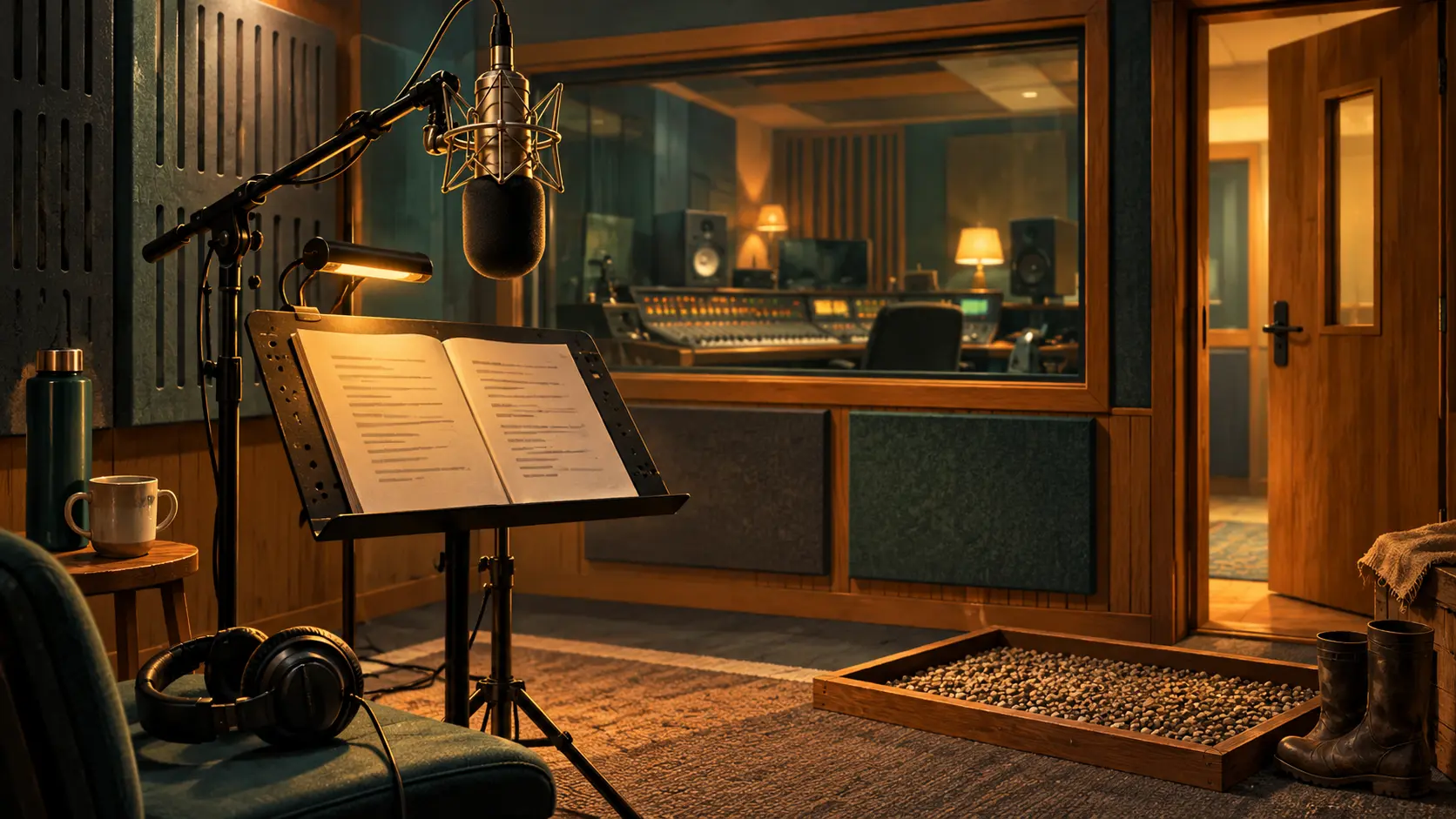
The BBC’s decision to abandon plans for a new recording studio for The Archers raises a question that reaches well beyond one programme: how should we value the facilities and working relationships behind professional sound production?
A studio can appear on a balance sheet as space, equipment and running costs. For the people making a continuing drama, it is also a working instrument. Its acoustics, layout and familiar routines influence how performances are captured and how efficiently a production moves from script to finished programme.
What has happened to The Archers recording studio?
Reporting published on 13 October 2026 confirmed that the BBC would no longer build a dedicated radio drama studio at the Tea Factory, its new Birmingham base in Digbeth. The production team is still expected to move there in early 2028. Recording arrangements are being reviewed separately, with existing BBC facilities elsewhere in the UK and external options in the West Midlands under consideration. RadioToday’s report sets out the BBC’s position: reduce costs while maintaining production standards.
That leaves open the possibility that recording could leave Birmingham after a relationship spanning the programme’s 75-year history. It does not mean a move out of the city has been confirmed. No final recording location has been announced in the reporting cited here.
Why cast and crew are concerned
On 16 October, Equity published an open letter backed by more than 100 current and former cast members, including Dame Judi Dench, alongside writers, directors and sound professionals. The signatories urged the BBC to keep recording in Birmingham. Their concerns include the effects of separating recording and production, the demands of the programme’s facilities, and the loss of regional employment opportunities. These are the team’s arguments about the proposed change, rather than established outcomes. Read the letter on Equity’s website.
For me, the wider issue is how easily the value of an established production environment can disappear from a discussion about buildings. Moving the equipment is only one part of moving the work.
A radio drama studio is part of the performance
In audio drama, listeners construct the scene from what they hear. Distance, movement, room character and the relationship between dialogue and effects all help establish a believable place. A microphone records those relationships as well as the words.
Consider a simple scene in which a character crosses a room, opens a door and answers someone outside. The actors’ movement, the timing of the door and the change in acoustic perspective need to feel connected. A suitable studio gives the team options for creating that connection during the performance.
Live spot effects can also give actors something to respond to. Footsteps, crockery or a door movement can become part of the timing of a scene. Adding effects later is an equally valid creative method, but it changes where decisions are made and how much work is required after recording.
These are general production considerations, rather than a claim that every scene in The Archers follows one method. The practical question for any replacement facility is whether it supports the programme’s actual recording process.
Familiar facilities support efficient decisions
An experienced team learns a room in detail. People know where to position a performer, which surfaces work for a particular effect, how far an actor can move before the perspective changes, and how to reset quickly between scenes.
That knowledge reduces the number of decisions that need to be explained from scratch. A director can ask for a small change and the actors and sound team can respond with a shared understanding of the result.
A new facility can support excellent work. Establishing the same fluency may require acoustic tests, rehearsals, revised procedures and time for the team to learn how the space behaves. Those transition requirements belong in the production plan.
What relocation can mean for audio post-production
For broadcast sound and audio post-production, the consequences of a studio change may emerge downstream. Different room reflections, background noise or microphone arrangements can affect editing and matching between recordings. Changes to how effects are performed can shift work into the edit and mix.
Modern tools provide considerable flexibility, but each additional repair, reconstruction or matching task uses time. The relevant measure is whether the replacement workflow can deliver the required sound consistently within the available schedule.
A sensible assessment would follow representative scenes through the whole process: recording, dialogue editing, effects work, mixing and final quality checks. Listening to the finished result matters, but so does understanding the effort needed to achieve it.
The cost comparison needs the whole workflow
The BBC’s stated need to find savings deserves a serious response. That makes a full comparison of the options especially important. Capital expenditure and studio hire are only part of the calculation.
Travel, accommodation, equipment storage, setup time, studio availability, staff continuity and any additional post-production work can all affect the total cost. A shared facility may offer advantages, provided its schedule and practical arrangements fit the production.
Without access to the BBC’s detailed options and budgets, it would be premature to claim that a replacement will either save money overall or cost more. The useful question is what assumptions sit behind the comparison, and whether they reflect how the programme is made.
Birmingham’s production community matters
The debate also concerns the relationship between a long-running programme and its regional production community. Regular work helps sustain careers, professional networks and opportunities to learn alongside experienced colleagues.
Keeping production management in a city and keeping recording there are different commitments. Both can contribute to the local industry, but they involve different people and day-to-day activities. Evaluating the impact of a change requires attention to both.
What should a replacement studio demonstrate?
Before a decision is settled, I would want any proposed recording arrangement to demonstrate suitable acoustic spaces, reliable access, practical provision for effects, and a workable relationship between cast, directors, production and sound.
I would also want transition time and complete production costs to be included. A successful move would preserve the team’s ability to work confidently and respond to changes while meeting the programme’s schedule.
The Archers recording studio decision is a reminder that facilities and people develop together. The character and quality of a programme can depend on the interaction between them, even when much of that interaction is invisible to the listener.
For those working in broadcast sound and audio post-production: how much do established facilities and production teams contribute to the programmes you create? And when a move becomes necessary, what needs protecting first?
Discover more from AV On the Edge Education
Subscribe to get the latest posts sent to your email.

